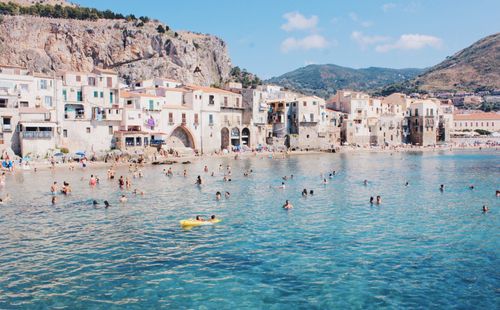
If you want to deeply analyze the second season of The White Lotus, which takes place mostly at a luxury resort in Taormina, Sicily, you need to know that Taormina was, starting in the mid-1800s: a destination for well-to-do LGBTQ+ visitors.
That queer history had to have been a factor for showrunner Mike White, who is openly bisexual, in choosing to set his sexcapades-driven satire there. It also provides an insider’s joke to students of history who would laugh at a gaggle of supposedly rich gay men—“These gays, they’re trying to murder me”—stopping at modern-day Taormina on a yachting excursion.
The trend seemed to have been set off by German photographer Wilhelm von Gloeden, who first visited Sicily in 1877 and became well known in certain circles, then much more broadly, for his homoerotic photos of Sicilian men and boys. Von Gloeden perhaps gave uptight queer Northern Europeans the idea that Sicilians were free and easy with their bodies.
Oscar Wilde visited in 1892. And it wasn’t just men who made the journey: in the early 1900s Crimean poet Sophia Parnok, known as “Russia’s Sappho,” visited but, according to legend, left when she realized that Sicilians weren’t as free with their daughters as with their sons.
Though queer writers and artists like Truman Capote, Tennessee Williams and André Gide visited in the mid-20th century, Taormina gradually lost its gay vibe. But it’s amazing how long these stereotypes last. The show’s interest in sex work might have been informed by this power dynamic, though, on TV, the gay-for-pay character Jack is played by British actor Leo Woodall.
If you want to deeply analyze the second season of The White Lotus, which takes place mostly at a luxury resort in Taormina, Sicily, you need to know that Taormina was, starting in the mid-1800s: a destination for well-to-do LGBTQ+ visitors.
That queer history had to have been a factor for showrunner Mike White, who is openly bisexual, in choosing to set his sexcapades-driven satire there. It also provides an insider’s joke to students of history who would laugh at a gaggle of supposedly rich gay men—“These gays, they’re trying to murder me”—stopping at modern-day Taormina on a yachting excursion.
The trend seemed to have been set off by German photographer Wilhelm von Gloeden, who first visited Sicily in 1877 and became well known in certain circles, then much more broadly, for his homoerotic photos of Sicilian men and boys. Von Gloeden perhaps gave uptight queer Northern Europeans the idea that Sicilians were free and easy with their bodies.
Oscar Wilde visited in 1892. And it wasn’t just men who made the journey: in the early 1900s Crimean poet Sophia Parnok, known as “Russia’s Sappho,” visited but, according to legend, left when she realized that Sicilians weren’t as free with their daughters as with their sons.
Though queer writers and artists like Truman Capote, Tennessee Williams and André Gide visited in the mid-20th century, Taormina gradually lost its gay vibe. But it’s amazing how long these stereotypes last. The show’s interest in sex work might have been informed by this power dynamic, though, on TV, the gay-for-pay character Jack is played by British actor Leo Woodall.
If you want to deeply analyze the second season of The White Lotus, which takes place mostly at a luxury resort in Taormina, Sicily, you need to know that Taormina was, starting in the mid-1800s: a destination for well-to-do LGBTQ+ visitors.
That queer history had to have been a factor for showrunner Mike White, who is openly bisexual, in choosing to set his sexcapades-driven satire there. It also provides an insider’s joke to students of history who would laugh at a gaggle of supposedly rich gay men—“These gays, they’re trying to murder me”—stopping at modern-day Taormina on a yachting excursion.
The trend seemed to have been set off by German photographer Wilhelm von Gloeden, who first visited Sicily in 1877 and became well known in certain circles, then much more broadly, for his homoerotic photos of Sicilian men and boys. Von Gloeden perhaps gave uptight queer Northern Europeans the idea that Sicilians were free and easy with their bodies.
Oscar Wilde visited in 1892. And it wasn’t just men who made the journey: in the early 1900s Crimean poet Sophia Parnok, known as “Russia’s Sappho,” visited but, according to legend, left when she realized that Sicilians weren’t as free with their daughters as with their sons.
Though queer writers and artists like Truman Capote, Tennessee Williams and André Gide visited in the mid-20th century, Taormina gradually lost its gay vibe. But it’s amazing how long these stereotypes last. The show’s interest in sex work might have been informed by this power dynamic, though, on TV, the gay-for-pay character Jack is played by British actor Leo Woodall.
If you want to deeply analyze the second season of The White Lotus, which takes place mostly at a luxury resort in Taormina, Sicily, you need to know that Taormina was, starting in the mid-1800s: a destination for well-to-do LGBTQ+ visitors.
That queer history had to have been a factor for showrunner Mike White, who is openly bisexual, in choosing to set his sexcapades-driven satire there. It also provides an insider’s joke to students of history who would laugh at a gaggle of supposedly rich gay men—“These gays, they’re trying to murder me”—stopping at modern-day Taormina on a yachting excursion.
The trend seemed to have been set off by German photographer Wilhelm von Gloeden, who first visited Sicily in 1877 and became well known in certain circles, then much more broadly, for his homoerotic photos of Sicilian men and boys. Von Gloeden perhaps gave uptight queer Northern Europeans the idea that Sicilians were free and easy with their bodies.
Oscar Wilde visited in 1892. And it wasn’t just men who made the journey: in the early 1900s Crimean poet Sophia Parnok, known as “Russia’s Sappho,” visited but, according to legend, left when she realized that Sicilians weren’t as free with their daughters as with their sons.
Though queer writers and artists like Truman Capote, Tennessee Williams and André Gide visited in the mid-20th century, Taormina gradually lost its gay vibe. But it’s amazing how long these stereotypes last. The show’s interest in sex work might have been informed by this power dynamic, though, on TV, the gay-for-pay character Jack is played by British actor Leo Woodall.
If you want to deeply analyze the second season of The White Lotus, which takes place mostly at a luxury resort in Taormina, Sicily, you need to know that Taormina was, starting in the mid-1800s: a destination for well-to-do LGBTQ+ visitors.
That queer history had to have been a factor for showrunner Mike White, who is openly bisexual, in choosing to set his sexcapades-driven satire there. It also provides an insider’s joke to students of history who would laugh at a gaggle of supposedly rich gay men—“These gays, they’re trying to murder me”—stopping at modern-day Taormina on a yachting excursion.
The trend seemed to have been set off by German photographer Wilhelm von Gloeden, who first visited Sicily in 1877 and became well known in certain circles, then much more broadly, for his homoerotic photos of Sicilian men and boys. Von Gloeden perhaps gave uptight queer Northern Europeans the idea that Sicilians were free and easy with their bodies.
Oscar Wilde visited in 1892. And it wasn’t just men who made the journey: in the early 1900s Crimean poet Sophia Parnok, known as “Russia’s Sappho,” visited but, according to legend, left when she realized that Sicilians weren’t as free with their daughters as with their sons.
Though queer writers and artists like Truman Capote, Tennessee Williams and André Gide visited in the mid-20th century, Taormina gradually lost its gay vibe. But it’s amazing how long these stereotypes last. The show’s interest in sex work might have been informed by this power dynamic, though, on TV, the gay-for-pay character Jack is played by British actor Leo Woodall.